Plant & Pollinator Center Receives Funding from the Dorothy Levis Munroe Research Fund

GREENSBORO, NC – JUNE 13, 2024 – In the 2023-24 academic year, the College of Arts & Sciences Office of Research supported 20 UNCG students with nearly $20,000 in grants from the Dorothy Levis Munroe Research Fund. The fund was endowed by alumna Dorothy Levis Munroe ‘44 to support student research in the “natural and mathematical sciences.”

All 20 students conducted research in STEM departments: twelve in Biology, four in Chemistry and Biochemistry, two in Computer Science, and one each in Mathematics and Nanoscience. Students won support by submitting a research proposal and project budget up to $1000, depending on their project needs. Five Munroe grant recipients were undergraduate students, fourteen were graduate students, and one was a post-bacc student.

The list of items purchased with Munroe funds shows the diversity of research undertaken by these student scientists. They used award funds to purchase:

  • 250 Pine seedlings, 144 bluestem grass plugs, potting soil, and pots
  • Dissecting scissors, nets, an aquarium bubbler, and a heavy-duty wagon to haul these and other tools needed for collecting and tagging fish in streams across central NC
  • Carbon nanotubes to study DNA uptake of duckweed
  • Fluorescent Yellow Particles and Fetal Bovine Serum for research into the uptake of microplastics by human endothelial cells, which line the inside of our blood vessels.
  • Kits for genetic analysis in experiments with the drought-resistant grain tef
  • Chemical reagents and organic solvents
  • Lab supplies such as Erlenmeyer Flasks and well plates.

Munroe grants also supported travel by students to conduct research and attend conferences and scientific meetings. Their work took them to places near and far, including:

  • Fieldwork in Morganton and Elizabeth City, NC to study the ecology of chigger mites.
  • Fieldwork in South Africa’s Kruger National Park to study the effects of drought, fire, and extreme grazing on grasslands.
  • Fieldwork in the Gateway Research Park and at UNCG’s Plant and Pollinator Center.  The UNCG Plant & Pollinator is located at the 75-acre Gateway Research Park located on Summit Avenue in northeast Greensboro.  
  • Fieldwork at the Konza Prairie Biological Station in Kansas to study grassland recovery following nitrogen cessation in areas previously subject to chronic nitrogen addition.
  • NVIDIA’s GTC 2024, one of the top Artificial Intelligence conferences, to gain insights to improve a project developing new processes for clinical trial recruitment.
  • The Wildlife Society’s annual conference, to present a poster on phylogeography and flea community ecology of the long-tailed ground squirrel.
  • The International Computing and Combinatorics Conference, to share a paper titled “Improved Sourcewise Roundtrip Spanners with Constant Stretch.”
  • The Joint Mathematics Meetings, to share mathematical research into ecological models of species interactions.
  • The North Carolina Academy of Science annual meeting, where the student won the John Bowley Derieux Research Award.

Many of the students also participated in UNC Greensboro’s Graduate Research & Creativity Showcase of Scholarship or in the Thomas Undergraduate Research & Creativity Expo, where they presented posters or gave oral presentations.

Dorothy Levis Munroe graduated as a chemistry major from UNCG in 1944, along with her twin sister Katheryne Levis McCormick. Munroe went on to earn a master’s in chemistry, teach high school mathematics for many years, and become the first woman to serve on the board of education in Newark, Delaware. By endowing this fund at UNCG, Munroe hoped to encourage students to pursue the sciences by providing resources for their research.

Source:  UNCG Office of Research and Engagement
https://research.uncg.edu/

Gateway UNCG MRI Center Stimulates Nursing Student’s Interest in Critical Care, Research

JUNE 13, 2024 – GREENSBORO, NC – UNCG rising third-year Sebastian Rodriguez learned early on to give himself – and his dreams – space to evolve.

In high school, Rodriguez was one of the top tennis players in North Carolina and on track to become a professional, but he was also a standout student. An interest in health care led him to Harvard’s C-Chan Public Health Summit just before his senior year in high school.

“I learned more about the practice professions, including nursing,” Rodriguez says. “As a nurse, you’re able to directly engage with patients and make sure they’re getting the care they need. I was really interested in the profession and decided nursing was what I wanted to do.”

Rodriguez chose UNCG because of its strong School of Nursing. Now, the Blue & Gold Merit Scholarship recipient is excelling both in and outside the classroom, from studying abroad to conducting brain injury research in the School of Health and Human Sciences with support from a UNCG Thomas Undergraduate Research and Creativity Award.

FINDING THE RIGHT FIT AT UNCG

Rodriguez commutes from Durham to Greensboro for his courses and extracurriculars, but he wouldn’t choose to be anywhere else.

“I love UNCG. I like the relatively small size of the campus,” he says. “I’ve been able to make so many great connections with professors. At a bigger school with more students, it can be harder to interact with professors.”

In the first two years of his undergraduate studies, Rodriquez connected with multiple faculty members, including microbiology instructor Robin Maxwell who brought the basic science material to life.

“Professor Maxwell was incredible,” he says. “Our lectures were often filled with personal stories she would use to enhance how we would learn and ingrain concepts.”

Outside of the classroom – and across the world – Rodriguez has put his academics into action.

Through UNCG Volunteers Around the World , he learned about a medical internship opportunity in Bocas del Toro, Panama, where he spent two weeks shadowing physicians and interacting with patients. He says it has been a highlight of his college experience.

Closer to home, Rodriguez invests in cultivating his nursing skill set. He is now certified as a phlebotomist and nurse aide, the latter recommended by his cousin and grandmother who are both nurses.

“They’re always telling me that getting your CNA is really helpful for patient experience because you learn to handle a large number of patients, help with coordinating behind-the-scenes, and talk with providers,” he says.

BUILDING THE RESEARCH MUSCLE

Another highlight of Rodriguez’s time at UNCG: getting involved with undergraduate research.

In his first year, he worked with Dr. Stephanie Pickett, an associate professor in the School of Nursing, on psychosocial stressors among minoritized women. He also co-authored a post for the Medical Care Blog of the American Public Health Association.  As part of his research in Monroe’s laboratory, Rodriguez worked in the Gateway UNCG MRI Center, located at the 75-acre Gateway Research Park in east Greensboro.  The research park is a joint partnership between UNCG and North Carolina A&T State University.

“These experiences increased my curiosity about research, but I knew I wanted something more hands-on in terms of data collection or data analysis,” he says.

His next steps into research brought him to a mixed martial arts arena and Gateway UNCG MRI center, where he was part of a 10-person research team led by Dr. Derek Monroe. While scientists have investigated concussions among mixed martial arts athletes, less is known about subconcussive impacts: the focal topic for the team of researchers.

Using mouthguard sensors, they collected data about the frequency, type, and magnitude of impacts experienced by the athletes during sparring. The team logged 1,000 impacts for nine athletes over 50 training sessions. The athletes also came to the Gateway UNCG MRI Center for baseline and specialized scans.

“Watching these athletes, I can really appreciate the amount of work ethic they put in every time they step on the mat,” Rodriguez says. “It was a lot of fun watching it and a great environment to be in.”

With their data, the team can better understand what types of impacts – such as linear versus angular – these athletes most frequently experience and then link these injuries to brain anatomy.

Rodriguez is especially interested in how a diffusion MRI – which tracks water movement within the brain – might indicate trauma.

“The multi-modal approach of Dr. Monroe’s lab emphasized the importance of a holistic perspective in neuroimaging research,” he says.

Diving into research projects gave Rodriguez strengths he can bring to his nursing career, including skills in collaboration and proficiency with scientific terminology.

“Reading scientific articles is definitely a skill and a muscle that you grow over time,” he says. “I enjoy diving into the rabbit hole to answer whatever question I have.”

CULTIVATING A GROWTH MINDSET

Rodriguez’s experience in Monroe’s laboratory has expanded his career goals: now, he wants to become a critical care nurse actively involved in research.

“I’m passionate about the critical care field,” he says. “I want to learn how to be that provider who can keep calm during a critical situation and really help patients that are in need while dealing with fatigue and minimizing errors. This is one skill I can bring from my tennis training and would like to hone in a health care context.”

In the upcoming school year, Rodriguez will focus on pediatric populations and patients with neurobehavioral challenges across the lifespan.

“I anticipate that these nursing-related courses and experiences will not only deepen my understanding of neurobehavioral problems and pediatric health but also equip me with the knowledge and skills needed to deliver evidence-based and compassionate care to pediatric populations,” he says. “This will help me become a more competent and empathetic nurse.”

Rodriguez realizes he may gravitate to different aspects of health care as he moves through his career, and he hopes a career in nursing will give him this flexibility to adapt his work to his evolving passions.

“Experiences can change perspectives. The path of nursing allows me to have the opportunity to change perspective and passion as I go,” he says. “There’s also a big need for this profession. Nurses are essential.”

Story by Rachel Damiani
Photography by Sean Norona, University Communications

Merck, NC A&T Launch Joint Merck Biotechnology Learning Center

EAST GREENSBORO, N.C. (April 19, 2024) – Merck (NYSE: MRK), known as MSD outside of the United States and Canada, and North Carolina Agricultural and Technical State University announced today the opening of the Merck Biotechnology Learning Center at Gateway Research Park in Greensboro, North Carolina.

The Merck Biotechnology Learning Center is a 4,025-square-foot facility that includes classroom space, a process laboratory and state-of-the-art biopharmaceutical manufacturing equipment. In the Learning Center, students and Merck trainees will experience hands-on learning and advanced discovery opportunities to enhance academic programming and training for biotechnology careers.

“We are embarking on a significant journey with the launch of the Merck Biotechnology Learning Center and our collaboration with N.C. A&T,” said Sanat Chattopadhyay, executive vice president and president, Merck Manufacturing Division. “The Learning Center is not just a building; it’s an incubator for innovation, a path to discovery, and a beacon guiding the next generation of thinkers, problem-solvers and leaders who will drive our industry forward.”

The opening was marked with a joint celebration that included senior leaders from both Merck and A&T, current and former A&T students, and local government officials, including North Carolina Commerce Secretary Machelle Baker Sanders. Attendees participated in tours of the lab and classroom facilities to see firsthand the immersive learning opportunities.

Merck and A&T, America’s premier historically Black doctoral research university, developed this collaboration based on mutual values of innovation, community engagement and a commitment to diversity and inclusion. The joint effort between Merck and A&T supports the increasing need for biotech training and education in North Carolina and highlights the importance of business and historically Black college and university (HBCU) cooperation in growing diverse talent in the biotech sector.

“The Merck Biotechnology Learning Center will provide opportunities for N.C. A&T students to understand what a career in biotech looks like,” said Amanda Taylor, vice president and plant manager at the Merck Manufacturing Division site in Durham, North Carolina. “We have several wonderful N.C. A&T graduates working at our Durham site already, and there is so much growth in manufacturing across North Carolina. Through our collaboration with N.C. A&T, we’re developing new and innovative ways to build a pipeline of talent in the Triad and beyond.”

The opening of the Merck Biotechnology Learning Center is the launch of a long-term collaboration between Merck and A&T. The two organizations will partner on several initiatives to support student enrichment, including curricula development, a speaker series and STEM (Science, Technology, Engineering and Mathematics) community outreach.

“I am thrilled to announce our groundbreaking collaboration with Merck, which heralds a new era of innovation in biotechnology education,” said Tonya Smith-Jackson, Ph.D., provost and executive vice chancellor of Academic Affairs. “This partnership signifies a union between academia and industry, and a commitment to excellence, innovation and the advancement of scientific knowledge, as it not only provides our students with unparalleled access to state-of-the-art labs, but also invaluable mentorship from Merck professionals, ensuring they emerge as industry-ready leaders poised to shape the future of biotechnology. The Merck Biotechnology Learning Center will serve as a hub of learning and discovery, and it is also the start of a collaboration where we are going to jointly advance the mission of both Merck and N.C. A&T.”

Merck has been a member of the North Carolina community for more than 40 years. Today, nearly 1,500 Merck colleagues work at North Carolina facilities in Durham and Wilson, including numerous A&T alumni. A&T’s College of Engineering is the No. 1 producer of African American graduates in engineering in the United States.

Source:  NC A&T Research and Economic Development
Media Contact Information: jtorok@ncat.edu

Paul Meyer Appointed as Executive Director of Gateway Research Park

GREENSBORO, NC (January 23, 2024) – The Gateway Research Park (“Gateway”) Board of Directors have announced that Mr. Paul Meyer will assume the position of Executive Director of the organization effective Monday, January 29, 2024.  Meyer, who retired as Executive Director of the NC League of Municipalities in December 2021, has more than 25 years of non-profit leadership experience with a focus on growing organizations, developing talent, optimizing operations, and achieving positive financial performance.

In making the announcement and after a national search, Gateway Board Chair Kevin Baker said, “Paul’s experience in leading large and complex non-profit organizations, his deep understanding of both state and local government operations and funding, and his past ties to and relationships within the Piedmont Triad Region, all make Paul the right person to fill this critical role for Gateway.” Meyer will take over from Jim Westmoreland, who has served as Interim Director since March 2020 and announced his intention to resign in July 2023 to pursue other professional opportunities.

Meyer said, “I am honored to be provided the opportunity to serve as the Executive Director of Gateway. Having spent some time in the Piedmont Triad Region in the past and having become familiar with Gateway’s impressive portfolio of tenants and culture of on-going success, I look forward to working with the Gateway Board, NC A&T State University, UNCG, and the community to continue to advance the unlimited potential of Gateway and its future.”

The mission of Gateway Research Park, which is a partnership of NC A&T State University and UNCG, is to be a catalyst for university research, innovation, and economic development. Formed in 2003 as a 501(c) 3 not-for-profit, Gateway maintains a 70-year land lease with the State of North Carolina, operates two 75-acre research and development campuses in Greensboro, and has a diverse mix of private, non-profit, and academic tenants on its campuses. In addition, Gateway also provides management support services for Union Square Campus Inc.

Gateway Research Park provides a collaborative environment, which combines groundbreaking business organizations with world-class laboratories, highly advanced equipment and the intellectual capital of faculty and students from partner universities. The tenants and organizations connected to Gateway provide rich shared resources for technological growth, discovery, and progress. Any company that can benefit from collaboration is welcome at Gateway South, located at 2901 East Gate City Boulevard in east Greensboro, and Gateway North located at 5900 Summit Avenue, near the Bryan Park complex just off the Greensboro Urban Loop.

For more information, visit www.GatewayResearchPark.com.

For more information contact:

Mr.Kevin Baker
Chair, Gateway Board of Directors and Executive Director, Piedmont Triad International Airport.
bakerk@gsoair.org
336-665-5600

Merck, A&T to Establish Biotechnology Learning Center at Gateway Research Park

GREENSBORO, N.C. (June 7, 2023) – North Carolina Agricultural and Technical State University and Merck (NYSE:MRK) announced a collaboration agreement today for Merck to build a biotechnology learning center at Gateway Research Park’s South Campus in East Greensboro.

Merck will outfit the facility with the equipment and classroom spaces necessary to provide and enhance academic programming and training for biotechnology careers for North Carolina A&T students. A process laboratory will allow opportunities for students to put knowledge into practice in an advanced discovery setting.

The 4,025-square-foot facility, expected to be completed in 2024, will include manufacturing and research components with vaccine manufacturing process training for new and existing Merck employees.

“Merck Durham is committed to the community and the development of talent,” said Amanda Taylor, plant manager for the Merck Manufacturing Division site in Durham, North Carolina. “In this future facility, students will learn science, technology, engineering and mathematics skills through hands-on applications in manufacturing and research.”

“This forward-thinking partnership housed on the Gateway Research campus emphasizes both N.C. A&T and Merck’s commitment to optimize and develop innovative ideas in collaborative facilities that will not only benefit health outcomes, but will strengthen our impact in the research ecosystem for this region and state going forward,” said North Carolina A&T Chancellor Harold L. Martin Sr.

The collaboration will add significantly to biotechnology research and education already underway in colleges and departments across A&T. In addition to biotechnology and bioengineering degree and certificate programs in the Joint School of Nanoscience and Nanoengineering, the colleges of Engineering, Science and Technology, and Agriculture and Environmental Sciences, the university is developing a Department of Defense-funded Center of Excellence in Biotechnology.

The collaboration aims to not only provide training, but also build a pipeline of talent for Merck and the biotechnology industry overall.

“The Merck partnership fits well within our 2030 Strategic Plan, which demonstrates our commitment to transformative engagement,” said Tonya Smith-Jackson, Ph.D., A&T provost and executive vice chancellor of Academic Affairs. “We partnered with Merck because of their commitment to advance the human condition and strong values around diversity and inclusion. A&T is central to producing highly qualified students. Our nationally-recognized excellence in community engagement will also expand access to biotech teaching, training and research.”


Source:  NCAT.edu
By Jamie Crockett / 06/07/2023 Research and Economic Development

ImpactData Partners with Guilford County Schools on Dream Center Campus at Gateway Research Park

GREENSBORO, N.C. – January 12, 2023 – ImpactData has chosen East Greensboro to develop its flagship product, the Dream Center in partnership with North Carolina A&T State University. The facility will be located at Gateway Research Park South Campus (2901 East Gate City Boulevard), where the company will build out 115,000 square feet of new construction, creating 28 new jobs, and investing more than $130 million over the phases of the project. The Dream Center is a mixed-use facility that will include a 10 MegaWatt hybrid co-location data center, a higher education innovation center, and workforce development co-working flex space to support the neighboring community.

“In the past five years the City has been intentional about making equitable investments, especially as it relates to East Greensboro,” said Greensboro Mayor Nancy Vaughan. “ImpactData is adding to the variety of innovation taking place in the Gateway Research Park, while setting the foundation for those seeking careers in the technology sector.”

ImpactData is a minority-owned digital infrastructure firm that delivers mission critical infrastructure focused on partnerships with HBCUs and their surrounding communities in select national markets.

“ImpactData is committed to investing in the tech innovation that is shaping the Greensboro community through this partnership with North Carolina A&T State University, and Gateway Research Park,” said Terry Comer, CEO, ImpactData. “This initiative is a bright reflection of our company’s national vision for reshaping public private partnerships.”
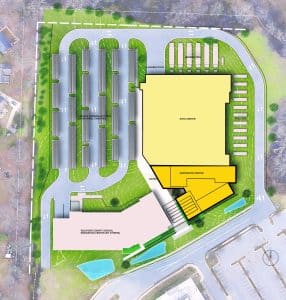
In addition to ImpactData’s inaugural Dream Center with NC A&T, Gateway’s Digital Transformation Campus will feature Guilford County School’s (GCS) newly constructed ~70,000 sq. ft. Community Education Center (CEC). The new GCS facility, primarily funded by ESSER/Federal COVID-19 funds, will be used to address the negative impacts of COVID-19 on the school district and the region’s students, families, staff, and communities. The Community Education Center will provide flex spaces with tutoring and educational programming, adult education and digital skills initiatives, as well as community meeting and engagement spaces for students, adults and families.

“GCS is a forward-thinking and future-minded school district striving to improve programming and educational options for our more than 68,000 K-12 students and families. The CEC will provide the district additional space to expand our innovative practices for all kinds of learners throughout the district and the community,” Superintendent Dr. Whitney Oakley stated. “GCS is poised to take our nationally acclaimed learning recovery efforts to new heights, and the CEC will help us continue our focus on community engagement as a foundation for success for all of our students and families.”

The facility will also address the school district’s need for staff training amenities, as well as newly constructed spaces beyond traditional classrooms with targeted resources for enhanced student, adult education, and community support.

“ImpactData’s Dream Center Campus plans are a great example of the progress that can be made when we combine the strengths of a leading research university with the opportunities that can be found at a dynamic research park,” said North Carolina A&T State University Chancellor Harold L. Martin, Sr. “Both A&T and Gateway Research Park are committed to economic success in East Greensboro and throughout our city, and as a university with a $1.5 billion economic impact across this state, that commitment is heartfelt on our campus. We look forward to the many great benefits that ImpactData and the Dream Center Campus will yield throughout this region.”

“These combined projects will transform Gateway Research Park and help further our mission of serving as a regional catalyst for innovation, economic development, and university research,” said Jim Westmoreland, Interim Executive Director for Gateway. “In short, the planned services and programs to be offered at the Dream Center Campus will significantly benefit the broader community and help further establish Gateway as a premier destination for advanced research and development work — via the computational horsepower to be offered through ImpactData’s proposed data center.”

“Greensboro/Guilford County is second to none when it comes to offering a tech company strong engineering talent, as well as an amazing quality of life for its employees. We are excited for what these projects will mean for East Greensboro.” said Brent Christensen, President & CEO Greensboro Chamber of Commerce.

ImpactData also partners with DigitalBridge (NYSE: DBRG), a leading global digital infrastructure firm, which manages more than $50 billion in communications infrastructure investments, including data centers and other digital assets. DigitalBridge has assisted ImpactData in creating technical designs, financial structures, curriculums and community programming in support of this innovative mixed-use investment. DigitalBridge is committed to closing the digital divide, partnering with ImpactData and other organizations on this important mission.

“DigitalBridge is pleased to support ImpactData’s engagement with NCA&T and the Greensboro community through the development of its innovation center designed to drive advancement and upskilling while also providing a new, high-quality data center to support companies in the area,” said Marc Ganzi, Chief Executive Officer at DigitalBridge.

The ImpactData and GCS teams are working with a wide range of local architects, planners, engineers, construction professionals and grant writers on the Dream Center Campus, which is currently in the advanced design and planning phase. The partners have begun a number of community engagement initiatives and charettes, and will conduct public in-person and virtual “Construction Day” activities in connection with sub-contracting, inclusion efforts, capacity building, and local training opportunities from the Dream Center Campus.

“It is an honor to be welcomed into the City of Greensboro, East Greensboro and Guilford County. We are grateful, and focused on the opportunity to establish high-speed connectivity, advanced digital infrastructure and digital transformation in these communities.” said David Calloway, ImpactData’s COO.

The Guilford County Economic Development Alliance, consisting of the Greensboro Chamber of Commerce and High Point Economic Development Corporation, worked together with the Economic Development Partnership of North Carolina, City of Greensboro, Guilford County, North Carolina Agricultural and Technical State University, Gateway University Research Park, Duke Energy, Guilford Technical Community College, the Guilford County Workforce Development Board, Guilford County Schools, Piedmont Natural Gas, and, North Carolina Department of Commerce in securing ImpactData and GCS’s investments in Guilford County and the City of Greensboro.

About the Greensboro Chamber
The Greensboro Chamber of Commerce is the largest business organization in the community serving more than 1,250 member businesses through programming designed to help them succeed and grow. A partner in the Guilford County Economic Development Alliance, the Chamber also serves as Greensboro’s primary economic development organization, with special emphasis placed on community and entrepreneurial advancement through Action Greensboro and Launch Greensboro.

About ImpactData
ImpactData designs, builds, and operates secure, purpose-built colocation data centers on the campuses of colleges and universities with a community transformation delivery model. Anchored in hybrid, multicloud technology, ImpactData is building a network of distributed, mini-cloud regions that integrate digital infrastructure with academic, innovation & workforce training space to foster more literate, interconnected campuses and communities. Beginning with the Dream Center Campus at Gateway Research Park in Greensboro, NC, ImpactData expects to deploy over $1 billion in “digital learning” infrastructure over the next decade.

Contact: Megan Mabry
Vice President – Marketing & Communications
Greensboro Chamber of Commerce
828.808.7224

 

A Sea Change in Sepsis Management from Horseshoe Crab Innovation

GREENSBORO, N.C. – December 13, 2022 – Kepley Biosystems, a North Carolina biotechnology company located at Gateway Research Park, has been awarded a $1 million National Science Foundation (NSF) Small Business Innovation Research (SBIR) Phase II grant to continue product development in sepsis diagnosis and management. The grant, entitled, “A Rapid, Sensitive Pathogen Typing and Antibiotic Sensitivity Test for Bloodstream Infections (COVID-19)” improves infectious disease management and would transform the current standard of care. Sepsis takes a life every 2.8 seconds and is the leading cause of hospital mortality, annually taking some 49 million lives, worldwide. Now ranked as the most expensive healthcare challenge, its US toll exceeds $62 billion per year. Yet the disease has continued to pose management and prevention challenges, to which one out of three sepsis patients succumbs.

Rapid detection of bloodborne infections prior to the onset of sepsis is critical, as the risk of mortality increases 8% every hour without appropriate treatment. However, when suspected from clinical symptoms that often mimic other causes, empiric antibiotic therapy has given rise to antimicrobial resistant microbes or ‘superbugs’ due to lengthy, established test methods. As such, overuse of antibiotics has been declared one of the top ten threats to humanity by the World Health Organization.

This Kepley BioSystems NSF grant will support Phase II development of a rapid bloodstream infection detection technology. The innovation employs a component of horseshoe crab blood, Limulus amebocyte lysate (LAL), which reacts with pathogens at parts per trillion levels. “Such sensitivity is comparable to a single drop of water in 20 Olympic size pools,” said Kepley director of Scientific Communications and Operations, Lee Robertson.

“Infectious disease complexities in a respiratory pandemic have highlighted how early diagnosis in 1-3 hours with small sample volumes and pathogen differentiation could make an outsized contribution to healthcare. The infection sequelae are similar, but treatment differs significantly. Proof of these parameters is also in our Phase II goals,” said Kepley director of Research and Development, Dr. Rachel Tinker-Kulberg. She added, “If we can impact the entire continuum of care, from admissions through patient care and discharge – by identifying infections early and optimizing treatment, this work could save lives.”

In a recent statement by the Centers for Disease Control and Prevention (CDC), the agency reported that “historic progress made in antibiotic prescribing was reversed during the pandemic.” Overall, it has been estimated that antimicrobial resistance contributes to approximately 10% of sepsis deaths. The Kepley Biosystem Phase II NSF diagnostic and infectious disease surveillance research would also seek to answer this call to address critical health care gaps and slow the spread of resistance.

Kepley BioSystems president, Dr. Anthony L. Dellinger asked, “If not LAL – then what – as the scourge of bloodborne disease overwhelms governments, science and industry? Sepsis morbidity is projected to lead all causes of death in my lifetime.”

Their Phase I research demonstrated the potential for a screening assay that would be more affordable than molecular assays and provide same-day treatment guidance without waiting days for traditional clinical microbiology. Phase II development will focus on alignment with existing hospital workflows and infectious disease management protocols. In addition to the $1 million dollar Phase II contract, Kepley is eligible to receive an additional $500,000 in matching funds with a qualifying third-party investment.

Kepley scientists have established significant expertise in horseshoe crab husbandryoptimizing critical components of their nutrition, and resulting in a sustainable aquaculture platform. Phase I efforts produced lysate (LAL) that was more reactive and consistent than commercial materials collected from the wild, while monitoring and ensuring the wellbeing of the husbanded crabs.

Dellinger concluded, “We are seeking a partnership with a global industry leader to bring this technology to hospitals that urgently need new sepsis management tools while mitigating risks of antimicrobial resistance. That has been and continues to be a serious threat lurking behind COVID-19 and many other viral pathologies not suitable for antibiotic administration.”

About Kepley Biosystems, Inc.

Kepley Biosystems is a North Carolina-based biotech company founded in 2013, with partnerships with the Joint School of Nanoscience and Nanoengineering (JSNN), North Carolina Agriculture and Technical State University (NCA&T) and the University of North Carolina at Greensboro (UNCG). The Kepley mission is to address globally significant opportunities through IP development, research and disruptive innovation. This NSF Phase II SBIR is the 3rd research grant unique to horseshoe crabs and by extension, the practicality of scalable aquaculture of the invertebrate for captive, repetitive bleeding compared to wild capture and an estimated 30% morbidity annually for for biomedical bacterial endotoxin testing (BET). Horseshoe crab ranching at Kepley has been proven over a 6-year period with healthy animals, survival, and proven sustainability advantages. The necessity for captive/aquaculture derived LAL and hemocyanin substrates are vital beyond BET, moving into clinical screening of human blood to detect and type pathogens for preventing and mitigating sepsis, and most recently, a patent grant using hemocyanin as an additive for tissue transplants and a biologic preservative (Innocuous sterilant using hemocyanin and functionalized fullerenes with broad-spectrum intracellular and interstitial microbiocidal and radical scavenging effects for packaged matter, biologics and organics, cells, and limbs with cooper mediated oxygenation for viability and preservation, Brady, et.al., #11452288; 9/27/2022).

Website: www.kepleybiosystems.com

About the National Science Foundation’s Small Business Programs

America’s Seed Fund powered by NSF awards $200 million annually to startups and small businesses, transforming scientific discovery into products and services with commercial and societal impact. Startups working across almost all areas of science and technology can receive up to $2 million to support research and development (R&D), helping de-risk technology for commercial success. America’s Seed Fund is congressionally mandated through the Small Business Innovation Research (SBIR) program. The NSF is an independent federal agency with a budget of about $8.5 billion that supports fundamental research and education across all fields of science and engineering.

Website: https://seedfund.nsf.gov

CONTACT:
Anthony L. Dellinger, PhD
President at Kepley BioSystems Inc.
Email: adellinger@kepleybiosystems.com
Phone (Office): +1-336-217-5163
Address: 2901 East Gate City Blvd, Suite 2400, Greensboro, North Carolina 27401

SOURCE: Kepley BioSystems Inc.

N.C. A&T’S Driving Into the Future Event Unveils Rural Test Track for Autonomous Shuttles

GREENSBORO, N.C. – November 1, 2022 – Welcome to the future.

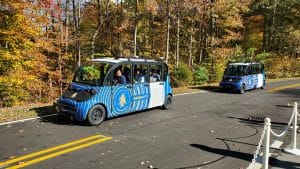
Already served by campus food delivery robots and humanoid and canine robots in College of Engineering labs, North Carolina A&T State University added an exciting new dimension to its portfolio of futuristic innovations on Nov. 1 as it unveiled three new autonomous shuttles that will soon go into use on campus and nearby roads.

The Aggie Auto shuttles were the stars of a special event at Gateway Research Park’s north campus, where research and development takes place for A&T’s steadily growing autonomous vehicle fleet, which now includes six passenger vehicles of varying sizes and capabilities. Gateway has something not found at any other university in the nation: A 2-mile test track that simulates rural driving conditions and allows researchers to test vehicles in real-world conditions.

While the new shuttles continue to be in development, it is expected that they will begin carrying riders in Spring 2023, not only taking students around campus, but to downtown Greensboro and back.

Leaders in local, state and federal transportation were invited to “test ride” the autonomous shuttles on the new Gateway North test track. Federal Highway Administration chief Stephanie Pollack, Greensboro Mayor Nancy Vaughan and Chancellor Harold L. Martin Sr. were among those who took part, with each shuttle carrying five passengers at a time.

This test track and autonomous fleet allow N.C. A&T researchers to develop groundbreaking and equitable transportation solutions for low-demand rural areas by providing more efficient customer-focused transportation services via flexible routing and scheduling. The vehicles will also reduce transportation costs because of smaller vehicle sizes and the adoption of ride-sharing strategies.

“It is exciting to see that talented students and researchers at N.C. A&T play such an important role in this transportation domain and push the boundaries of research, innovation and advanced technologies and serve all of society, particularly rural and underserved communities,” said Ali Karimoddini, Ph.D., director of NC-CAV Center of Excellence in Advanced Transportation Technology. Karimoddini is principal investigator on the autonomous vehicles, leading a robust team of faculty, graduate students and undergraduates at Gateway North.

The fleet is comprised of three low-speed self-driving shuttles, a high-speed self-driving van and two regular autonomous sedans.

Each vehicle is classified at SAE autonomy Level 4, meaning they can perform all driving tasks under specific circumstances, and a human driver can override and take control of the car. Additionally, the cars are in compliance with the Federal Motor Vehicle Safety Standards. The new shuttles’ maximum speed limit is 25 mph and, at this time, researchers have determined they can confidently drive them autonomously between 15 and 20 mph, depending on the terrain’s complexity.

The fleet allows researchers to test and develop different solutions for a variety of domains — university campuses, urban downtown areas, rural areas and highways. The Aggie Auto shuttles are  connected to the cloud, to each other and to home-base infrastructure to form what are known as connected autonomous microtransit vehicles, or CAVs.

To ensure safety, they must first undergo a period of socialization, which consists of mapping the routes they will follow and deploying vehicles one by one. This allows the research team to identify potential challenges and make appropriate technical and route adjustments in collaboration with the City of Greensboro Department of Transportation. The socilalization period is also intended to help drivers acclimate to seeing the shuttles in action and sharing the road comfortably and with confidence.

“The Federal Highway Administration is proud to support N.C. A&T’s work to develop this test track and bring the concept of connected and automated vehicles one step closer to market, especially for underserved and rural communities,” said FHWA’s Pollack. “The technology N.C. A&T is developing also has the potential to protect vulnerable road users – people who walk, bike or roll – by testing interactions with bike lanes, bus stops and more. These innovations are critical for ensuring the safety of all road users.”

Transportation research has a long history at A&T, beginning with the Transportation Institute’s establishment in 1970 and expansion to the Center for Advanced Transportation Mobility, which continues innovative research regarding vehicles, operators and infrastructure.

As a historically Black university, A&T has been a leader in preparing diverse populations to enter transportation-related professions. The university is the home to the first Summer Transportation Institute, now funded by FHWA, which has been running successfully for 30 years.

A&T is also home to the North Carolina Transportation Center of Excellence in Connected and Autonomous Vehicle Technology (NC-CAV), founded in 2019, and the Autonomous Cooperative Control of Emergent Systems of Systems Laboratory, or ACCESS Lab, founded in 2013. Both NC-CAV and ACCESS have worked to model, analyze and improve solutions for complex transportation and autonomy problems.

Other transportation/autonomy research faculty prominent in this work include Abdollah Homaifar, Ph.D., Leila Hashemi-Beni, Ph.D., John Kelly, Ph.D., and Steven Xiaochun Jiang, Ph.D., as well as collaborators from the University of North Carolina at Charlotte and North Carolina State University under the NC-CAV Center.

Throughout the history of autonomy at A&T, researchers have worked to expose undergraduate and graduate students to technology. Notably, A&T participated in the four-year international AutoDrive Challenge organized by SAE International and General Motors, and received several awards including the second place in the overall competition in 2019. Faculty researchers Sun Yi, Ph.D., Professor Daniel Acree, Younho Seong, Ph.D., and Balakrishna Gokaraju, Ph.D., joined Karimoddini and numerous Engineering students on the AutoDrive team.

These advancements in autonomous technology have been made possible through federal, state and local partnerships and funding from the National Science Foundation, FHWA, the North Carolina Department of Transportation, Downtown Greensboro Inc. as well as industrial partners.

Contributor: North Carolina A&T State University, Jamie Crockett, science writer

Gateway Research Park Announces the Appointment of Seven New Board Members

GREENSBORO, NC – September 20, 2022 – Gateway Research Park announced the appointment of seven new members to the board of directors. This brings the number of Gateway board members to 20.  The new members:

Mrs. Nancy Johnston
Executive Director
North Carolina Biotechnology Ctr, Piedmont Triad Region

Mr. Brian Moore
Assurance Director
PricewaterhouseCoopers LLP

Mr. Justin Outling
Partner and Director of Diversity & Inclusion
Brooks Pierce McLendon Humphrey & Leonard LLP

Mr. Mark Prince
President & CEO
Guilford Merchants Association (GMA)/FirstPoint, Inc.

Mr. Doug Speight
CEO
Triad Growth Partners

Mrs. Carole Simms
Partner
Fox Rothschild LLP

Mrs. Denise Turner Roth
National Business Line Executive
Director, Equity Center of Excellence
WSP USA

“We’re very pleased to welcome these eminent new members to our board,” said Chair Dr. Chuck McQueary.  “We’re entering what we expect to be a powerful growth phase at Gateway Research Park and these new directors bring in-depth skills and strengths to help guide our planned expansion and strategic direction.”

Jim Westmoreland, Interim Director of Gateway Research Park, said, “Multiple factors are coming together at this time that will allow us to continue to fulfill our core mission of serving as a regional and statewide catalyst for university research, innovation, and economic development. This group of dynamic new board members and established leaders positions us well to maximize our future success and overall impact.”

Greensboro officials give ImpactData grant for ‘Dream Center’ data center and education space

GREENSBORO, NC – August 16, 2022 – The Greensboro City Council unanimously approved a $530,359 incentive grant to a digital infrastructure firm to locate a “Dream Center” at Gateway Research Park.

Over a four-year period, ImpactData of Atlanta plans to invest $108.5 million to build the center and create 28 new jobs.

The average wage for the new full-time positions would be about $60,714, plus benefits. The lowest-paying job would earn about $35,000 a year, said Marshall Yandle, the city’s economic development manager.

The 115,000-square-foot project would include a data center, an innovation center owned and programmed by N.C. A&T and a lab dedicated to workforce training and community engagement.

“Whenever you look at research around economic development, high-speed connectivity is an important part of attracting clients and businesses to the area,” ImpactData CEO Terry Comer told the council. “Ultimately, you’re bringing resource-level connectivity — 100 megabit download speeds — into the community.”

Eventually, Comer said the company could build additional levels of connectivity from the center to local residences.

The minority-owned company looks to build these “Dream Centers” alongside colleges and universities, particularly HBCUs.

In a letter from A&T Chancellor Harold L. Martin Sr., he said the project “will allow the university to expand academic and research offerings in high-demand areas, such as cybersecurity and engineering, as well as further expand our growing presence in east Greensboro.”

“It would be a complement to the current businesses that are there in the area,” Councilwoman Sharon Hightower said.

Source:  Greensboro News & Record, Kenwyn Caranna, August 16, 2022